Integral Helmet vs Open-Face Helmet: Guide 2026
Breadcrumb
What are motorcycle helmets—and why does helmet type matter?
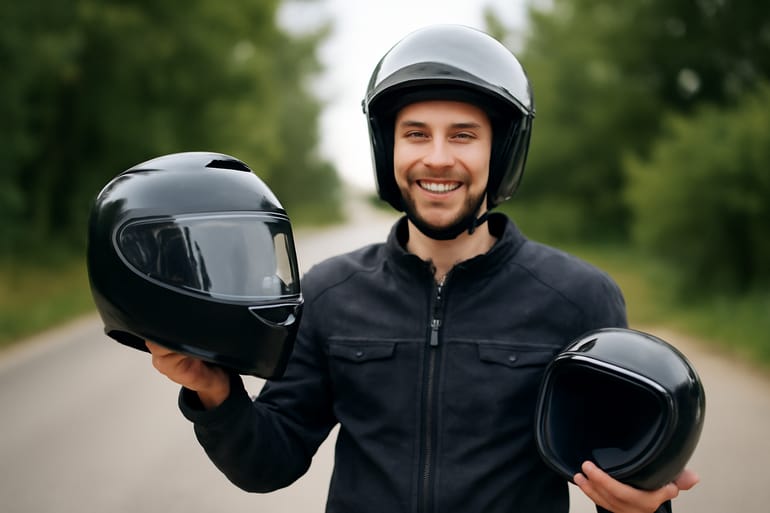
An integral helmet vs open-face helmet decision isn’t just about style—it changes how you’re protected, how you hear the world around you, and how comfortable you feel after an hour (or a full day) on the bike. In simple terms, a motorcycle helmet is personal protective equipment designed to manage impact energy, reduce abrasion, and protect critical areas like your skull, face, jaw, and eyes.
Different helmet types solve different problems:
- Integral (full-face) helmets prioritize maximum coverage, especially the chin bar and face shield.
- Open-face (jet) helmets prioritize ventilation and unobstructed feel, but leave your jaw and face more exposed.
- Modular helmets try to bridge the gap with a flip-up chin section.
If you want a quick, focused comparison first, integralhelm vs Jethelm – Vor- und Nachteile walks through the trade-offs in a more condensed format.
Best For Beginners
If you’re an absolute beginner, prioritize predictable protection and simple use: a full-face helmet with a clear visor and straightforward strap system is often the least confusing and most forgiving starting point.
What this hub helps you do
You’ll learn the core helmet types, the safety standards that matter in Germany, how to get fit right, and which buying criteria align with how you actually ride—without relying on brand hype.
Integral vs open-face vs modular: which helmet type fits your riding?

Think of helmet choice as matching coverage and convenience to your real-world riding. Here’s a practical overview of the three main types you’ll see most often in Germany.
Integral (full-face) helmets
Pros
- Maximum coverage including chin/jaw protection
- Better wind management and typically less noise at speed
- More weather protection (rain, cold, insects, road debris)
Cons
- Can feel warmer in slow traffic if ventilation is limited
- Slightly more effort to put on/take off (especially with glasses)
Open-face (jet) helmets
Pros
- Open feel, strong airflow, great for short urban rides
- Easier communication at stops
- Often lighter (though weight varies by build)
Cons
- No chin bar: less facial protection in impacts and slides
- More wind blast, more exposure to weather and debris
Modular (flip-up) helmets
A modular helmet can be a smart compromise if you want full-face protection while moving but appreciate flip-up convenience when stopped. Modularhelm: Vorteile, Einsatzbereiche, Kompatibilität explains typical use cases, compatibility considerations, and where modular helmets shine.
Best For Occasional Riders
If you’re a weekend/occasional rider, comfort and convenience matter—but don’t trade away protection too quickly. A well-ventilated full-face or a quality modular helmet often gives you “put it on and forget it” comfort without feeling overbuilt.
Quick decision cues
- Mostly highway or fast country roads → lean full-face
- Mostly city, scooters, relaxed speeds → open-face can be practical (with the right eye protection)
- Mixed use + glasses + frequent stops → consider modular
Safety standards and certifications: what should you look for in Germany?

Helmet safety is more than a logo—it’s a combination of tested performance, correct use, and realistic expectations. In Germany (and across much of Europe), you’ll commonly see certification language referencing ECE rules. The key is to buy a helmet that’s legal for road use where you ride and that suits your riding profile.
ECE and other standards—plain-English meaning
- ECE (European approval): indicates the helmet meets a defined test protocol for impact performance, retention, and more.
- DOT (US): a different regulatory approach; you may see it on some models, but legality and relevance depend on where you ride.
- Additional labels may exist, but always prioritize what’s accepted for your jurisdiction.
For a deep, readable breakdown (including ECE 22.05 and common comparisons), sicherheitsnormen erklärt: ECE 22.05, DOT, und Co. is the best next step.
What certifications do—and don’t—guarantee
Certifications help ensure a baseline, but they don’t mean “all helmets protect the same.” Fit, correct strap tension, visor/eye protection, and helmet condition (age, damage, modifications) strongly influence real-world safety.
Stay tuned
Stay tuned — our editorial team is working on a comprehensive guide about Sicherheitszertifizierungen & Prüfverfahren neutrale Übersicht.
Best For Value-for-Money Shoppers
If you’re hunting for price-performance, treat certification as non-negotiable, then compare: weight, ventilation performance, visor quality, and replacement part availability (visors/liners). Those details often separate “cheap” from “good value.”
How do you get the right fit, size, and comfort—without guesswork?
The biggest hidden reason riders dislike a helmet is poor fit. A great helmet type won’t help if it shifts, creates pressure points, or leaves gaps. Aim for a fit that is snug and stable without pain.
A practical fit check you can do at home
- Measure your head circumference (tape measure above eyebrows and around the widest part).
- Put the helmet on and fasten it; it should feel snug around cheeks and crown.
- With the strap fastened, try to roll the helmet forward off your head—if it moves easily, it’s too loose.
- Shake your head “yes/no.” The helmet should move your skin slightly, not slide independently.
Comfort features that change day-to-day experience
- Ventilation (intake/exhaust channels matter more than the number of vents)
- Removable, washable inner liner for hygiene and fit tuning
- Visor quality: distortion, fog resistance, sealing, and easy swapping
- Space for glasses or comms, if you use them
Stay tuned
Stay tuned — our editorial team is working on a comprehensive guide about Kaufberatung: Passform, Größenberatung, Mund- und Kinnschutz.
Stay tuned — our editorial team is working on a comprehensive guide about Belüftung, Innenfutter und Komfortmerkmale.
Stay tuned — our editorial team is working on a comprehensive guide about Sonnenvisier und Schutzfilter: Welches Modell erfüllt es?
Best For New Riders
If you’re a new rider, prioritize: stable fit, easy-to-use buckle/strap, and a visor you can operate with gloves. Comfort features are nice—but stability and correct sizing are what keep protection consistent.
Use cases, buying criteria, and brand-neutral options: what are the real trade-offs?
Once you understand helmet types and fit, the decision becomes: “Which risks and inconveniences am I willing to accept?” Here are buying criteria that stay valid even when you ignore brand names.
Match the helmet to your use case
- Commuting: consider wind noise, ventilation at low speed, quick on/off, and visor fog management
- Touring: prioritize long-wear comfort, stable aerodynamics, liner quality, and visor sealing
- Sport/fast riding: full-face protection, stability at speed, and strong visor lock/seal
- Scooter/urban: open-face convenience can be appealing, but ensure eye protection and secure retention
Brand-neutral (no-name) options: benefits and risks
Benefits
- Lower entry price can make certified protection accessible
- Basic features may be “good enough” for short, low-speed use
Risks
- More variation in finishing quality (visor seal, padding durability, vent performance)
- Harder to get replacement parts (visor, liner, mechanism)
- Comfort/noise performance may be inconsistent
Accessories that often deliver the best value
- Pinlock-style anti-fog solutions (or equivalent)
- Quality earplugs for long rides (noise management is fatigue management)
- Balaclava or helmet cap to improve comfort and hygiene
Best For Price-Performance Buyers
If you’re comparing on value, build a short list and test for: stable fit, visor clarity, and usable ventilation. A slightly higher price can be worth it if it reduces noise, fogging, and hot spots—issues that make people stop wearing their helmet correctly.
If you want personalized guidance for a specific head shape, glasses setup, or riding profile, consider using a consultation via a contact form on your preferred retailer or local gear specialist—small fit details can make a big difference.
Helmet care and maintenance: how to keep protection reliable
A helmet is safety equipment, but it’s also a wearable item that collects sweat, skin oils, dust, and road grime. Basic helmet maintenance helps preserve comfort, hygiene, and long-term function.
Cleaning: what to do regularly
- Wipe the exterior with mild soap and water; avoid harsh solvents
- Clean the visor with water first (to lift grit), then a soft microfiber cloth
- If the liner is removable, wash it according to instructions and let it air-dry fully
Storage and handling habits that prevent damage
- Store in a dry place away from direct sun and high heat
- Don’t hang it by the strap for long periods if it deforms padding
- Avoid dropping the helmet; impact history matters even if damage isn’t visible
When to replace a helmet
Replace after a significant impact, if the shell is compromised, or if retention/fit components no longer work properly. Also consider replacement when comfort and stability degrade and you can’t restore fit with fresh liners or pads.
A note for occasional riders
If you ride infrequently, your helmet can sit unused for long stretches—so do a quick pre-ride check: strap integrity, visor function, and padding condition. The goal is to ensure your helmet performs the same on ride day as it did when you bought it.
This isn’t about perfection—consistent care simply reduces the chance that fogging, loose padding, or stuck visor mechanisms become your next distraction on the road.
Buying checklist and FAQ
A practical motorcycle helmet buying checklist
Use this as a final pass before you buy or before the return window closes:
- Certification: Confirm the helmet is approved for road use where you ride.
- Fit and stability: No easy roll-off, no painful pressure points after 10–15 minutes.
- Chin and face coverage: Decide how much facial protection you want (full-face vs open-face).
- Visor and eye protection: Clear vision, good seal, manageable fogging.
- Ventilation and noise: Enough airflow for your climate; consider earplugs for longer rides.
- Usability with gloves: Vents, visor tab, and strap should be easy to operate.
- Replacement parts: Visors and liners should be obtainable at reasonable cost.
- Realistic budget: Spend where it reduces daily friction (fit, visor quality, comfort).
Can beginners start with an open-face helmet?
Yes, but it’s usually not the easiest “set-and-forget” choice. A full-face helmet tends to offer more consistent protection and weather/debris management while you build skills.
What’s better for occasional riders: full-face or modular?
For occasional riders, both can work well. Choose full-face for simplicity and maximum coverage, and choose modular if you’ll frequently stop, talk, or ride with glasses and want flip-up convenience.
How do I know if a helmet fits correctly if I’m buying online?
Measure head circumference, follow the size chart, and do stability checks at home (shake test and roll-off test) as soon as it arrives. If it creates sharp hot spots or moves independently of your skin, exchange sizes or try a different internal shape.
I’m looking for the best value—what features should I not compromise on?
Don’t compromise on certification and stable fit. After that, visor clarity/seal and liner comfort are the best “value multipliers” because they directly affect daily usability and fatigue.
Are budget, brand-neutral helmets safe enough in Germany?
They can be, if they’re properly certified and fit you correctly. The bigger risks are inconsistent comfort, poorer visor sealing, and limited spare parts—issues that may reduce long-term satisfaction and correct use.
Should I replace my helmet after a drop or minor impact?
If it’s a significant impact (or you’re unsure), treat replacement seriously—internal damage isn’t always visible. For minor drops from low height, inspect carefully for shell cracks, visor mechanism damage, and retention issues, and consider professional inspection if available.
Which helmet type is best for new riders who feel claustrophobic?
Start by trying multiple full-face helmets with different internal shapes and strong ventilation; many feel surprisingly open once fitted correctly. If claustrophobia persists, an open-face helmet can be a stepping stone, but pair it with robust eye protection and accept the trade-off in facial coverage.