Metal-Flake Finish: Helmet Look & Care Guide 2025
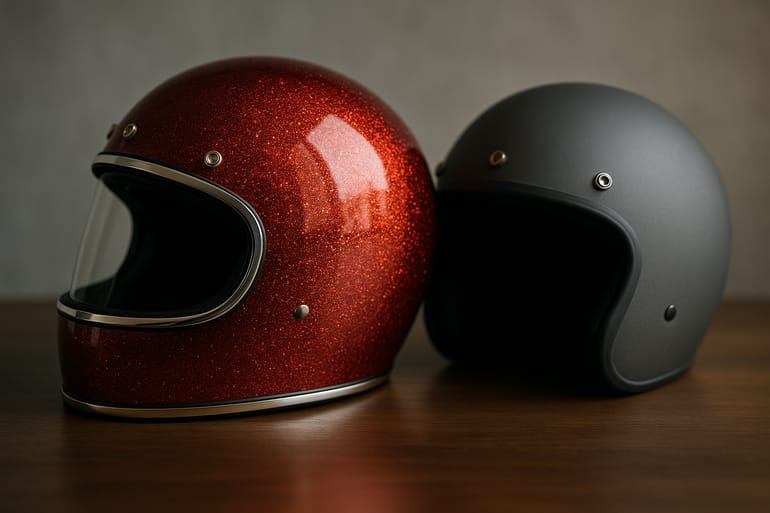
Metal-Flake Finish: What It Is and Why It Matters
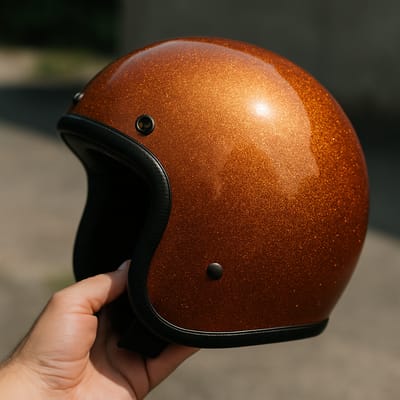
A metal-flake finish adds shimmering depth to a motorcycle helmet by suspending tiny reflective flakes under a clear coat. The effect is more than just sparkle—it changes how the surface plays with light, giving your helmet a dynamic, eye-catching look from every angle.
What you’re seeing
Under sunlight or streetlights, the flakes create a multi-layer glow that standard gloss paint can’t match and matte can’t replicate. Because the flakes sit beneath a protective clear coat, the finish appears to “float,” making lines and curves look sharper and more sculpted. Riders often choose a metal-flake finish to boost helmet optics and road visibility without loud graphics.
Why it’s popular
- Depth and dimension: The helmet seems to change with movement and light.
- Visibility boost: Subtle sparkle can enhance conspicuity at dusk and night.
- Personal style: From subtle microflake to bold, chunky flake, you control the vibe.
A metal-flake finish doesn’t alter safety certifications or shell integrity; it’s purely cosmetic when applied correctly. If you’re deciding between finishes, this guide explains how the metal-flake finish is built, how it compares to gloss and matte options, and how to care for it so it keeps shining ride after ride.
How Metal-Flake Paint Works and Changes Optics
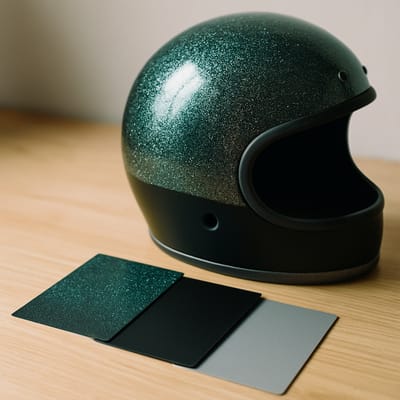
The paint stack
Most metal-flake helmets use a layered system: primer → base color → flake-laden midcoat → high-build clear coat. The flakes—aluminum or polyester—vary in size. Microflake delivers a refined glint; larger flake pops with a bold, custom vibe. Because flakes sit below the clear, the surface stays smooth, and the metal-flake finish gains that glassy depth.
Light, angle, and depth
The flakes act like tiny mirrors, reflecting light in different directions. That’s why a metal-flake finish “flips” and sparkles as you move—highlights brighten on ridgelines while recesses stay darker, exaggerating the helmet’s shape and sharpening body lines. Under harsh midday sun you’ll see crisp sparkle; at dusk, you get a softer, pearly twinkle. Streetlights create pinpricks of light that make the shell look alive.
Practical notes
- Weight impact is negligible; the effect comes from optics, not mass.
- Well-applied clear coat protects the flakes from UV and abrasion.
- The finish doesn’t affect aerodynamics or ventilation performance.
If craftsmanship is good, the metal-flake finish should show even distribution, consistent “twinkle,” and no rough texture. Slight orange peel is common in painted parts, but quality clear should still look smooth with minimal distortion.
Metal-Flake vs Gloss vs Matte: Pros and Cons
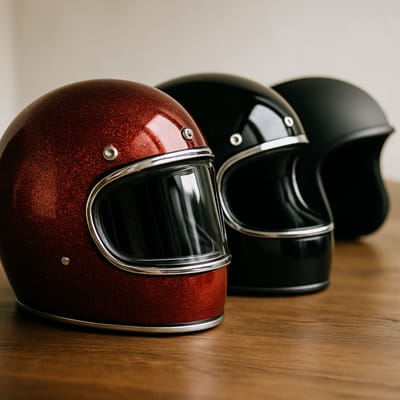
Where metal-flake shines
- Visual depth: Looks richer than standard gloss; adds dimension and movement.
- Conspicuity: Subtle sparkle can help you stand out in traffic.
- Versatility: Works with classic and modern colorways, from micro to bold flake.
Trade-offs to consider
- Price: Multi-layer builds can cost more than basic paint.
- Imperfections: Heavy flake can magnify poor prep (runs, dust nibs, orange peel).
- Care: Aggressive polishes can haze the clear over time.
Gloss vs matte
- Gloss: Bright shine, easy to clean, but shows swirls and fine scratches.
- Matte: Low-reflection stealth look, hides swirls, but cannot be polished; fingerprints and oils can show. Cleaning needs gentle, non-gloss products.
In a direct comparison, a metal-flake finish offers the richness of gloss with a unique, light-reactive sparkle that matte can’t provide. It won’t alter aerodynamics, noise, or safety—those come from shell design and fit. Think of this choice as pure helmet finish preference: metal-flake for dynamic depth, gloss for classic shine, matte for muted minimalism. For many riders, the mix of style and visibility makes metal-flake the sweet spot in the gloss vs matte decision.
Care, Durability, and a Smarter Buying Checklist
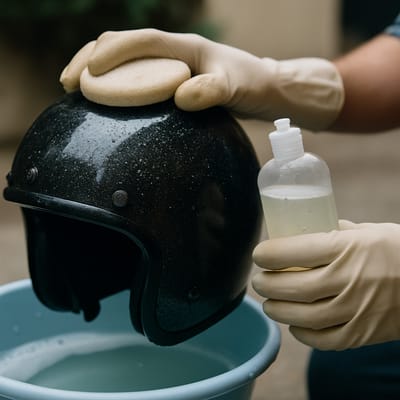
Care and maintenance
- Rinse off grit, then wash with pH‑neutral shampoo and warm water.
- Use soft microfiber; avoid abrasive pads and harsh solvents (alcohol, ammonia).
- For a metal-flake finish, stick to non‑abrasive spray sealants or waxes safe for clear coat. Avoid heavy compounds.
- Remove bugs by softening with a damp towel for 5–10 minutes—don’t scrape.
- Store away from UV and heat; ventilate after wet rides to protect the clear.
Durability tips
Quality clear coat and UV‑stable pigments keep sparkle crisp for years. Chips and deep scratches come from impacts, not the flakes themselves. Promptly touch up paint damage to protect the substrate.
Buying checklist (non-brand friendly)
- Even flake distribution: No clumps, striping, or dull patches.
- Smooth clear coat: Minimal orange peel, no runs, fisheyes, or dust nibs.
- Clean edges: Tidy masking at vents, trim, and visor ports; no sharp paint lips.
- Consistency: Color and sparkle match across panels and accessories.
- Documentation: Finish care guidance and return policy for paint defects.
If finish quality, fit, and certification all check out, a metal-flake finish is a durable, stylish choice. Use these helmet care tips to keep that dynamic shine looking fresh.
Debug Information (Development Only)
Debug Information
Article: Metal-Flake Finish: What It Is and How It Transforms Helmets
Decision Metadata
- Decision UUID: 8955c099-33a4-4c9e-9b5f-5bb615068678
- Timestamp: 2025-12-08T09:57:54.196216
- Confidence: 0.6046153846153847
- Opportunity Score: 0.0
Content Strategy
- Content Gap: Gap in Helmet Types & Features coverage
- Themes:
- Commercial Level: N/A
Cluster Information
- Cluster IDs: e797d7f2c00ab5479270307b3c40d074
- Cluster Names: Helmet Finish Architecture
Generation
- Model: N/A
- Generated At: N/A